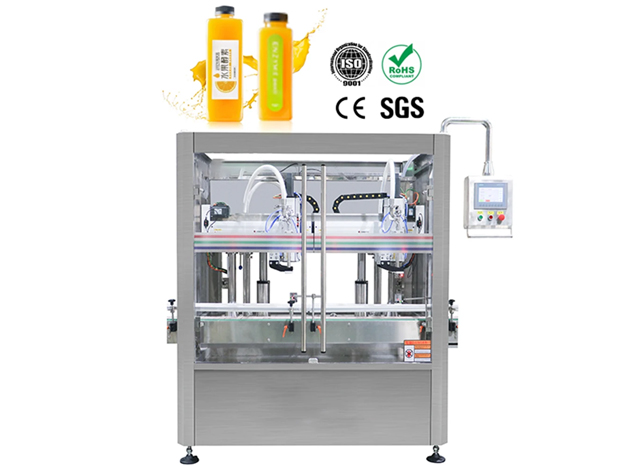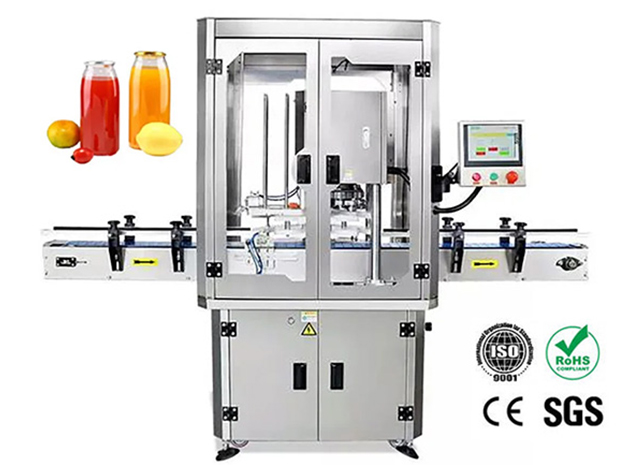
This is a question many customers just starting out or planning to upgrade their production lines ask: Can I buy a filling machine, labeling machine, and capping machine from different manufacturers and assemble them into one line myself?
The answer is: Yes, you can, but there are risks. Let's break it down from a few key perspectives.
1. Why do many people want to buy separately?
There are three main reasons: First, they believe buying separately makes pricing more transparent and allows for comparison shopping. Second, they think one manufacturer makes better filling machines while another excels at labeling machines, so they want to "pick the best from each." Third, they already have some equipment and only need to add the missing machines.
These ideas aren't wrong, but in practice, the following issues often arise.
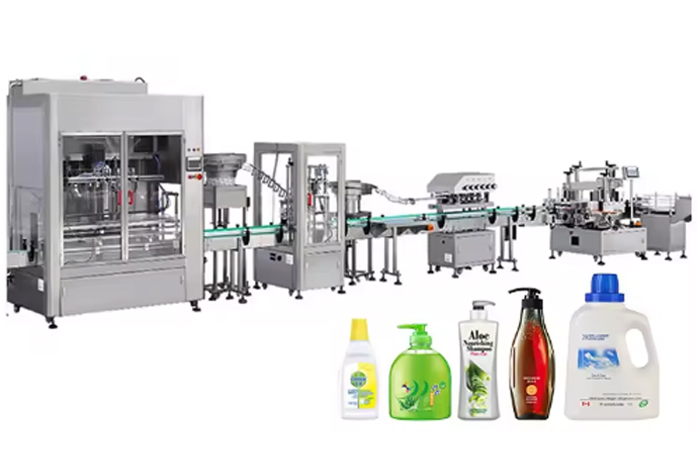
2. Potential problems with separate purchasing
1. Speed mismatch
Each machine has its own designed speed. Manufacturer A's filling machine runs at 60 bottles per minute, Manufacturer B's labeling machine only at 40 bottles per minute, and Manufacturer C's capping machine reaches 80 bottles per minute. The result is that filling is faster than labeling, requiring a lot of manual handling or additional accumulation tables, which actually reduces overall line efficiency.
2. Bottle handling incompatibility
Different manufacturers may have different conveyor heights, widths, and guide rail designs. When pieced together, bottles transferring from the filling machine to the labeling machine may tip over, get stuck, or transfer unevenly.
3. Ununified control system
Three machines each have their own operating interface, requiring separate start/stop operations without "one-button联动." If one machine alarms and stops, the other machines may keep running, causing bottle backup or empty runs.
4. Unclear after-sales responsibility
When something goes wrong with the production line, Manufacturer A says it's caused by Manufacturer B's labeling machine jamming bottles, and Manufacturer B says Manufacturer C's conveyor wasn't adjusted properly. Everyone blames each other, and ultimately the customer suffers.
3. If you insist on separate purchasing, what should you pay attention to?
Standardize interface specifications in advance: Including conveyor height, width, speed signal interfaces, etc. Confirm these with each manufacturer before purchasing.
Reserve interlock control signals: Require each machine to support I/O interlock signals, at least achieving "stop interlock."
Find a overall coordinator: Entrust one experienced manufacturer to handle the entire line commissioning, or bring in a third-party integrator.
4. A better choice: Find a supplier offering complete line solutions
For most small to medium-sized enterprises, it's more recommended to find a supplier that can provide a complete line solution. Although the price per machine may be slightly higher, it saves you the time cost of piecing things together, commissioning costs, and the risk of after-sales finger-pointing. When one machine has an issue, one phone call solves it — you don't need to be your own "chief engineer."
Final thoughts
Buying separately and assembling yourself is technically possible, but it's only suitable for teams with sufficient mechanical and electrical commissioning capabilities. If you're looking for peace of mind, stability, and fast production start-up, finding a reliable complete line supplier is often the more cost-effective choice.
If you have specific bottle types, production capacity requirements, and budget, feel free to contact us. We can help you evaluate whether separate purchasing or a complete line solution makes more sense for your situation.