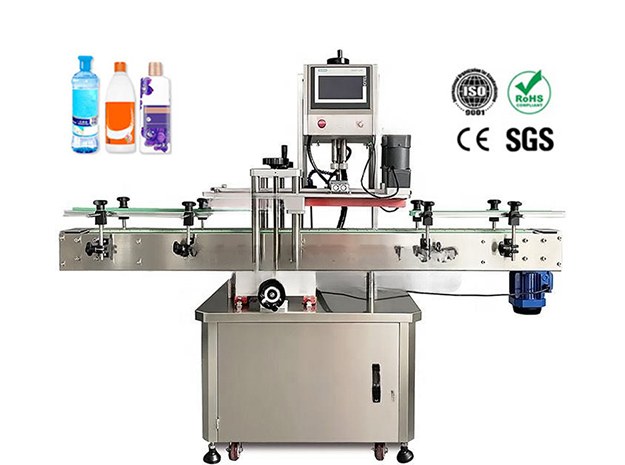
Many people perceive capping machines as "simple to look at, but a headache to adjust." Changing bottle type requires adjusting the capping head height, clamp tightness, torque... it takes at least half an hour to get it right, and usually requires experienced technicians. However, for many factories, skilled technicians are increasingly hard to find; even the best equipment is useless if no one knows how to operate it. This is why more and more capping machines are becoming "intelligent" and "easy to operate." The combination of touchscreen control and one-button calibration is turning capping machines into "user-friendly" equipment.
Traditional capping machines typically use mechanical adjustments. When changing bottle or cap types, operators need to loosen screws with a wrench, manually adjust the capping head height and clamp tightness, and then adjust the torque "by feel" by trying a few bottles. This process relies on experience, and different people may achieve different results. Moreover, if not properly adjusted, the capping machine may either leak due to insufficient tightening or break the cap due to overtightening. For small-batch, multi-variety production, frequent product changes mean frequent machine adjustments, resulting in high time and labor costs.
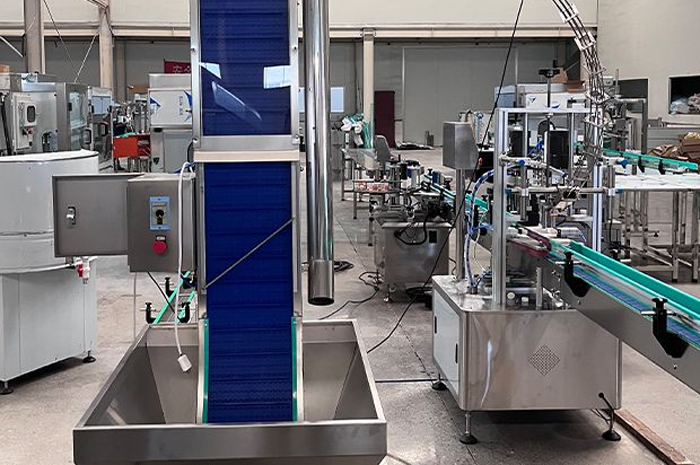
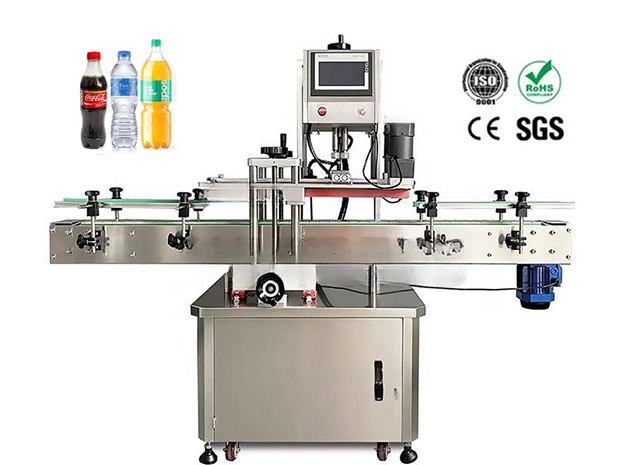
Modern capping machines have introduced a touchscreen control system. All parameters are displayed and adjustable on the screen, including capping height, capping torque, capping speed, and gripper opening and closing distance. Operators only need to input or select the corresponding parameters on the screen, and the machine will automatically adjust accordingly. Parameters for different bottle and cap types can be saved as "recipes" and directly recalled for the next production run, completing the switch in one second. No more wrenches, no more reliance on feel, no more repeated trial and error.
The touchscreen is just the first step. What truly makes the capping machine "easy to use" is the one-button calibration function. The principle of one-button calibration is that the machine has a built-in sensor. After pressing the calibration button, the capping head automatically descends to find the bottle mouth position, automatically measures the bottle height, and automatically calculates the appropriate capping depth and torque range. The entire process takes only a few seconds. The operator only needs to place a sample bottle, press a button, and leave the rest to the machine. This feature is especially user-friendly for factories that frequently change production lines. Even a new employee can complete the changeover setup in minutes without special training.
A capping machine with a touchscreen and one-click calibration brings tangible value to a factory. Changeover time is reduced from 30 minutes to less than 3 minutes, eliminating the need for experienced technicians; ordinary operators can handle it. Torque accuracy is controllable, significantly reducing defect rates. Parameters can be saved and retrieved, ensuring batch consistency.
The capping machine is no longer the "difficult" piece of equipment it once was. The touchscreen makes parameters visible, and one-click calibration simplifies setup. For companies seeking efficient and flexible production, this is not just an equipment upgrade, but a liberation of human resources. If you are troubled by slow changeovers and difficult machine setups, consider a capping machine with a touchscreen and one-click calibration. It may be easier to use than you think.
Henan Mingtan is a professional manufacturer of capping machines and automatic capping machines. If you have any needs in this area, please contact us. We will provide you with professional services and high-quality products.