Water is the source of life and a perennial "golden track" in the consumer market. However, while many investors focus on the scarcity of water sources or the explosive potential of brand marketing, they often overlook a fundamental factor that determines a company's survival: the synergistic efficiency of the production system. In today’s landscape—characterized by shrinking profit margins and increasingly stringent consumer demands for quality—factors such as the speed of plant commissioning, product quality consistency, and the ability to precisely manage the production chain have superseded simple price competition as the key benchmarks for a water company's long-term success.
The traditional model of "piecemeal procurement and self-assembly" is facing severe challenges. Sourcing water treatment equipment from Manufacturer A, filling lines from Manufacturer B, and downstream packaging from Integrator C may appear flexible, but it conceals significant hidden costs: repeated troubleshooting due to interface mismatches, wasted production capacity caused by unbalanced line pacing, and the post-sales nightmare of finger-pointing among multiple vendors when faults occur. Consequently, an integrated, end-to-end solution—seamlessly linking the entire process from raw water intake to finished product dispatch—is shifting from an "option" to a "necessity," becoming a strategic consensus among rational investors.
A Fully Integrated Chain: The Closed-Loop Journey from a Drop of Raw Water to a Bottle of Quality Water
A true integrated water purification and packaging line is far more than a mere collection of equipment; it represents the seamless interlocking of three core operational stages: the water purification system, the container forming and preparation section, and the filling, sealing, and downstream packaging units.
The line of defense for quality is established right from the initial purification stage. The front end of the production line is typically anchored by Reverse Osmosis (RO) technology. Raw water undergoes preliminary purification by passing sequentially through multi-media filters, activated carbon filters, and precision filters before a high-pressure pump delivers it to the RO membrane system. The membrane pores in this core component are precise to the 0.1-nanometer level, effectively filtering out heavy metal ions, bacteria, and the vast majority of organic compounds. In production lines designed for premium mineral or mountain spring water, ultrafiltration (UF) technology often serves as an alternative or complementary solution; by utilizing physical sieving principles, it effectively filters out microorganisms while ingeniously retaining natural minerals beneficial to human health. The treated water is temporarily stored in a pure water tank before being conveyed via sanitary piping to the filling station. Throughout this process, ozone mixing or ultraviolet (UV) sterilization acts as a final biological barrier, providing a "double safeguard" for the microbiological safety of the finished product.
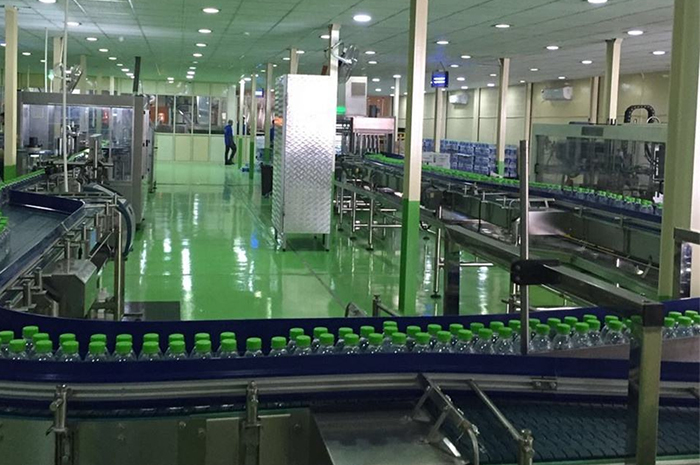
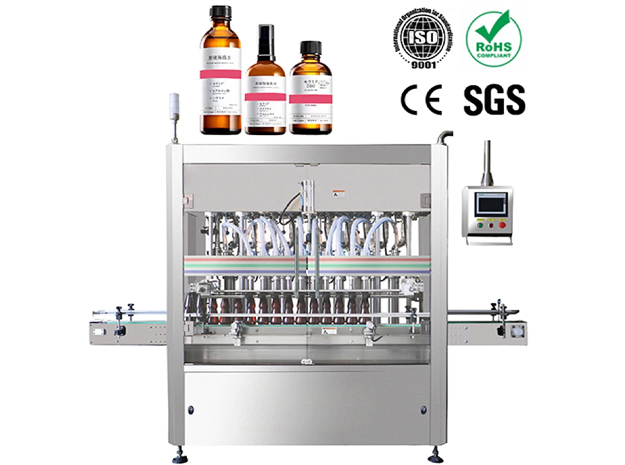
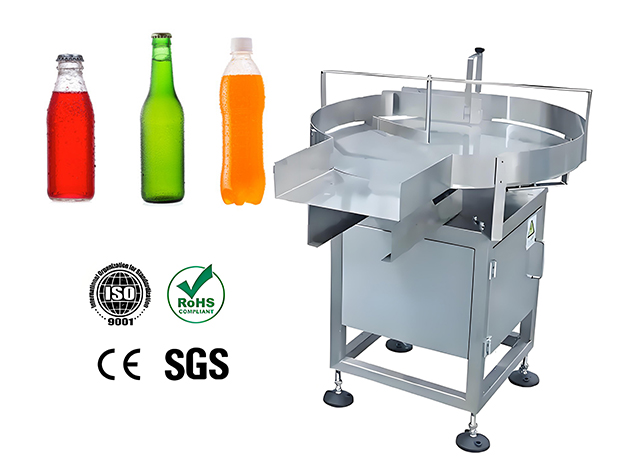
The essence of the packaging stage lies in the pursuit of the ultimate standards for both cleanliness and efficiency. For mainstream PET bottled water, integrated production lines typically feature "3-in-1" or even "4-in-1" combination units that merge blow molding, filling, and capping. Taking the industry-leading Krones SynchroBloc as an example, the blow molding and filling machines are directly coupled; blow-molded bottles are immediately transferred to the filling station via a star-wheel system. This setup eliminates the need for intermediate storage and long-distance transport of preforms, significantly reduces the factory floor space required, and physically cuts off potential pathways for secondary contamination. Such equipment offers a wide capacity range—from entry-level configurations producing 2,000 bottles per hour to high-speed units exceeding 24,000 bottles per hour—allowing for flexible customization. Meanwhile, production lines for 5-gallon bottled water require specialized processes such as automatic de-capping, high-pressure internal and external barrel washing, volumetric filling, and automatic capping. Advanced production lines, centrally coordinated by PLC control systems, enable fully automated, unmanned collaboration across the entire workflow—from empty barrel infeed to finished product palletizing. Real-world retrofit cases demonstrate that hourly output can surge from 60 barrels (under traditional methods) to over 150 barrels, delivering an immediate and substantial boost in production capacity.
The Logic of Integration: A Three-Fold Competitive Edge Tailored for the Water Industry
Compared to the stopgap measure of piecemeal equipment procurement, the strategic value of choosing an integrated production line extends far beyond mere convenience or simplicity. It truly empowers water plants with three synergistic advantages that are difficult to replicate:
The first barrier is the ability to maintain consistent quality through interconnected processes. Within an integrated design framework, the water treatment equipment's output capacity and effluent parameters are precisely matched beforehand with the filling machine's operating speed and volume. The production line can dynamically adjust the reverse osmosis system's output and ozone dosage in real-time based on filling flow rates, ensuring that every drop of water entering the bottle is in its optimal process state. More importantly, the entire line—from water treatment to filling—operates in a fully enclosed environment with positive-pressure protection, drastically reducing the risk of uncontrollable contamination associated with manual handling. Tracking data from actual retrofit projects shows that following the automation upgrade, the overall product pass rate consistently rises above 98%—a qualitative leap for the high-standard drinking water industry.
The second barrier is superior return on investment (ROI) efficiency throughout the lifecycle. An integrated line effectively avoids the "teething troubles" often associated with multi-vendor setups, such as protocol incompatibilities and mechanical interface misalignments. Having a single supplier handle the entire process—from design and manufacturing to commissioning—can cut the total installation and startup time by over 30%. Global optimization via a unified PLC bus ensures perfectly balanced cycle times across all workstations, minimizing idle waiting and material bottlenecks. Case studies of lines supplied by Lanhe Technology to leading brands like Lebaishi, Jingtian, and Wahaha demonstrate that their bottled water filling units can achieve a sustained, high-efficiency output of 3,000 barrels per hour—a direct economic benefit of holistic cycle-time optimization.
The third barrier is a streamlined operation and maintenance (O&M) experience that cuts costs and boosts efficiency. A production line provided by a single brand or system integrator means the customer deals with only one after-sales contact and follows a single set of spare-parts management standards. Furthermore, the advanced control system comes standard with a centralized Human-Machine Interface (HMI); operators can monitor thousands of data points—such as pressure, flow, temperature, and liquid levels—across the entire line from a single screen, with fault alarms pinpointing the exact workstation or even the specific sensor ID. This highly integrated management approach significantly reduces reliance on highly skilled technicians, allowing frontline operators to get up to speed quickly, while simultaneously lowering daily maintenance complexity and the total cost of ownership. Henan Mingtan specializes in the manufacturing, sales, and export of upstream and downstream packaging machinery and equipment. If you have requirements regarding water purification, filling, or packaging, please feel free to leave us a message.