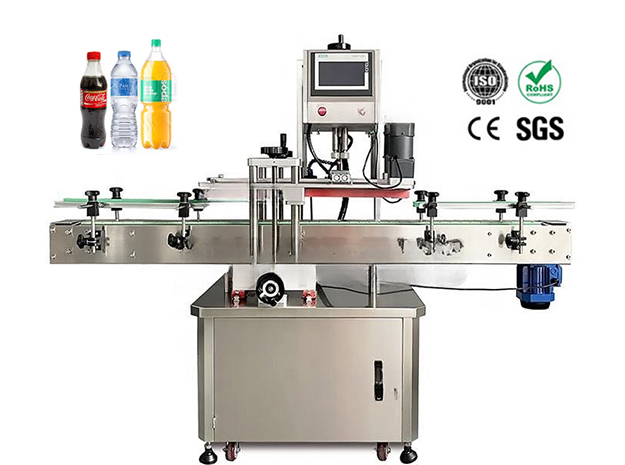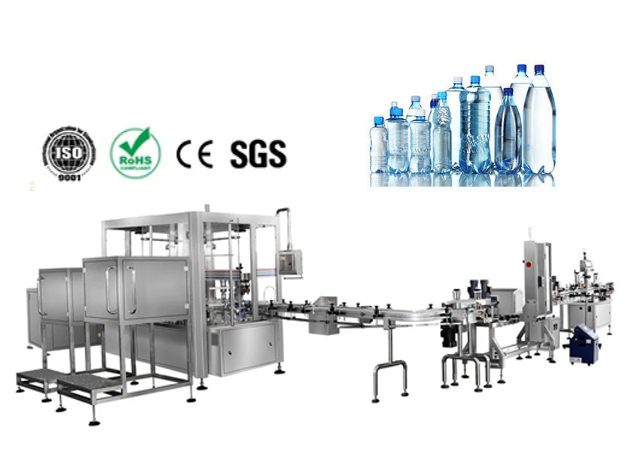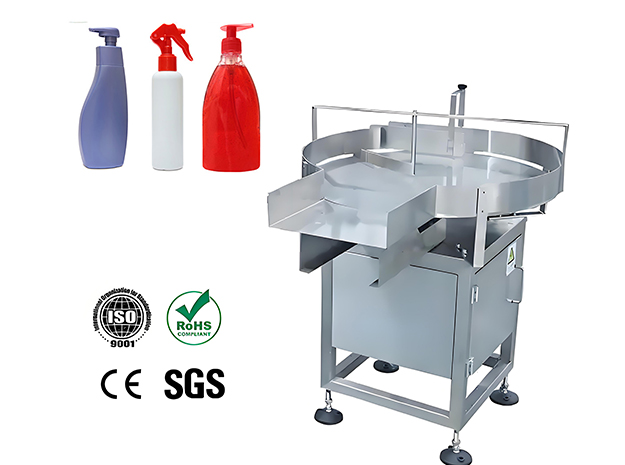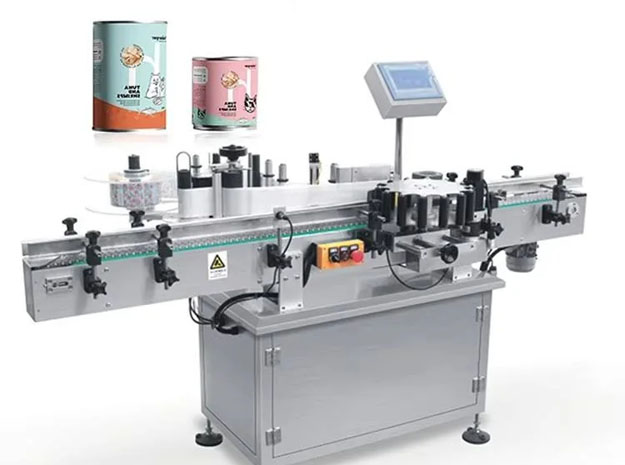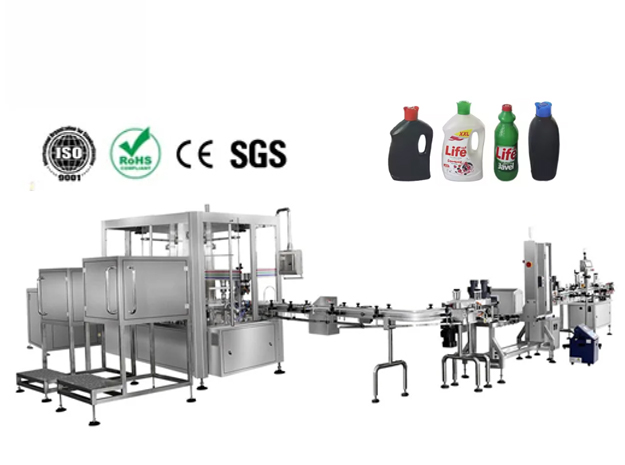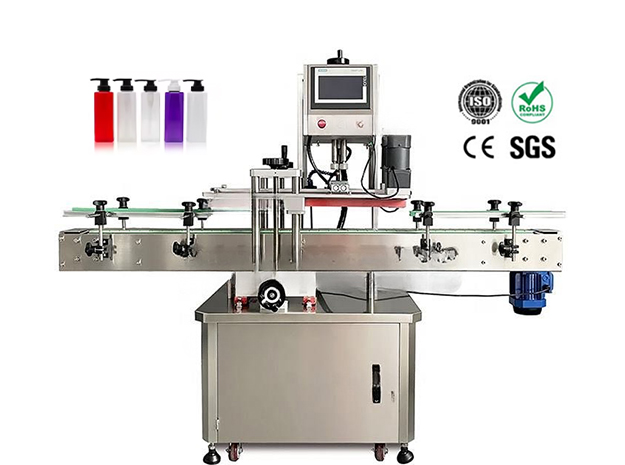
The transition from manual operation to fully automated production is no longer a matter of choice, but a crucial question of when to do it. In the past, the scene of workers busily operating filling guns, manual capping machines, and labeling scrapers in packaging workshops was a common sight in countless manufacturing companies. A single production line typically employed seven or eight, or even twenty or thirty people, relying on sheer numbers and the experience of skilled workers. However, with continuously rising labor costs and labor shortages spreading across various industries, this traditional model is facing unprecedented challenges. The advantages that packaging machinery demonstrates in this transformation are reshaping the production logic of manufacturing from multiple dimensions, including precision, efficiency, cost, safety, flexibility, and data-driven management.
The greatest uncertainty in manual operation lies in the condition of the workers. The filling volume relies entirely on the operator's feel and attention; precision may be achieved when alert in the morning, but deviations are inevitable when fatigue sets in in the afternoon. Capping torque cannot be standardized; some caps are too loose, leading to leakage during transport, while others are too tight, making them difficult for consumers to use. Labeling is a battle of "visual aesthetics," with misalignment, bubbles, and wrinkles being commonplace. This "good enough" production philosophy is unsustainable in today's quality-driven market. Full-process packaging machinery completely eliminates this uncertainty. Taking the filling stage as an example, a PLC control system combined with high-precision flow meters or weighing sensors stably controls filling accuracy within ±1% or even ±0.3%, ensuring the exact volume of each bottle. In the capping stage, servo motors precisely control torque, ensuring consistent tightness for every cap. The labeling system is equipped with CCD vision positioning, achieving label position accuracy of ±0.5mm. This consistent product quality is the fundamental guarantee of a company's brand reputation.
Efficiency is the most direct change brought about by packaging machinery. Taking a fully automated filling, capping, and labeling line with eight filling heads as an example, its hourly capacity can reach 6,000 to 12,000 bottles, which is 8 to 15 times that of a manual line. An order of 100,000 bottles, which previously required two weeks, can now be delivered in just two shifts. This leap in efficiency directly changes a company's order-taking capabilities and market competition landscape. When customers need urgent replenishment, automated production lines can respond quickly, reducing delivery cycles from weeks to days. For companies looking to expand into cross-border e-commerce or large supermarket channels, stable production capacity is a prerequisite for entry; without automated production lines, large-scale orders often have to be handed over to others.
Regarding cost control, many people's first reaction to automation is "saving labor." Admittedly, a manual line requires 8 to 10 operators, while a fully automated line with the same capacity only needs 1 to 2 people for material handling and inspection, reducing labor costs by more than 80%. However, the cost advantages of fully automated operation go far beyond this. The reduction in material loss is also significant. Material waste caused by dripping, splashing, and overfilling during manual filling is often difficult to quantify precisely, but for high-value liquids such as essential oils, pharmaceuticals, and pesticides, this loss can account for 3% to 5% of the total material cost. The anti-drip devices and precise metering functions of automated filling systems can reduce such losses to less than 1%. Furthermore, the low failure rate and long lifespan design of automated production lines make the depreciation cost per bottle virtually negligible. In the long run, the payback period for automation investments is typically 18 to 24 months, after which it enters the net profit period.
In industries such as food, pharmaceuticals, pesticides, and chemicals, production safety and compliance requirements are extremely stringent. In manual operation environments, workers directly contact materials, facing health risks from chemical corrosion and toxic substances, as well as the potential for accidents due to improper operation. Fully automated operation, through a completely enclosed conveying and filling system, minimizes direct contact between people and materials, reducing occupational exposure risks at the source. For production scenarios involving flammable and explosive materials, packaging machinery can be equipped with ATEX explosion-proof systems to protect electrical components from overvoltage and employ anti-static conveying equipment to minimize safety hazards. In terms of compliance, the production data recording system on fully automated lines provides complete archives of filling, capping, and labeling parameters for each batch of products, meeting the full traceability requirements of food and drug regulatory fields—a rigid requirement that is almost impossible to achieve manually.
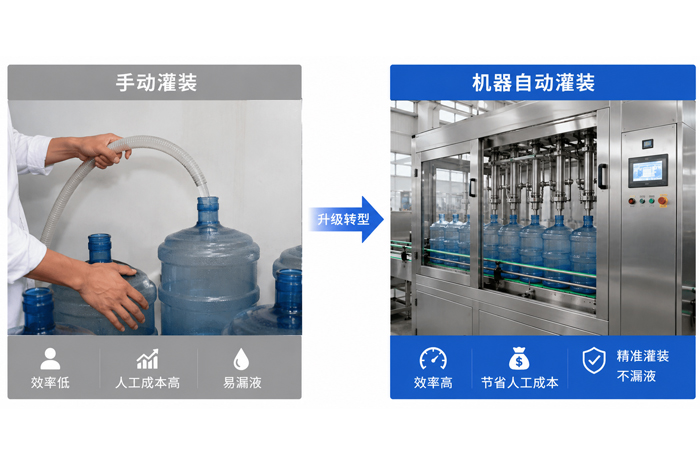
Unpredictable market demands and frequent product specification changes place increasingly higher demands on the flexibility of production lines. Modern packaging machinery generally adopts a modular design; by changing molds and recalling preset parameters, the same machine can switch between different bottle types and specifications within 15 to 30 minutes. This rapid changeover capability allows companies to flexibly respond to the market with a "small batch, multiple varieties" model, without needing to configure a dedicated production line for each product. More importantly, the fully automated operation creates a scalable production platform. When a company's order volume increases, it can achieve a step-by-step increase in production capacity by adding filling heads, and installing automated bottle unscramblers and case packers, without having to completely rebuild existing production lines. This gradual upgrade path effectively reduces the company's investment risk and transformation barriers.
Another profound advantage of fully automated operation lies in the qualitative change it brings to enterprise management. The production management system equipped on automated production lines can statistically analyze key operational indicators such as output, yield, downtime, and energy consumption in real time. All data is automatically uploaded and reports are generated. Production supervisors can remotely monitor the production line status via mobile phone or computer, making problem identification and bottleneck location more intuitive and efficient than ever before. This shift from "experience-driven" to "data-driven" has value that, to some extent, transcends the equipment itself. When companies have accurate production data, they can scientifically formulate production plans, optimize scheduling logic, and predict maintenance needs, thereby continuously improving overall operational efficiency.
The leap from manual operation to fully automated operation is far more than simply "replacing humans with machines." It brings about a comprehensive leap forward in six dimensions: stable product quality output, exponential capacity release, continuous optimization of overall costs, solid guarantee of safe production, agile and flexible market response, and scientific and transparent management decisions. This is redefining the packaging process's position in the entire manufacturing value chain. Packaging machinery is not merely a combination of cold iron blocks and motors; it is the ticket for enterprises to participate in higher-level market competition and a key bridge connecting "manufacturing" and "intelligent manufacturing." As the industry's watershed clearly emerges, companies that first achieve full-process automation will be the first to seize the initiative in the next growth cycle.
Henan Mingtan is a manufacturer specializing in the production and sales of packaging machinery, primarily producing filling machines, capping machines, labeling machines, and strapping machines. If you have any needs for these machines, please leave us a message, and we will arrange for a professional to understand your needs one-on-one and configure a production line or single machine for you.