Every liquid filling production line has its "golden age." As the years of use increase, equipment performance declines, failures become more frequent, and maintenance costs rise year by year. Many business owners face the same question: should they continue using this old equipment with minor repairs, upgrade and replace it with a new machine, or simply scrap it and buy a completely new production line? This decision is not easy. The following analysis from three perspectives will help you find the most suitable solution for your business.
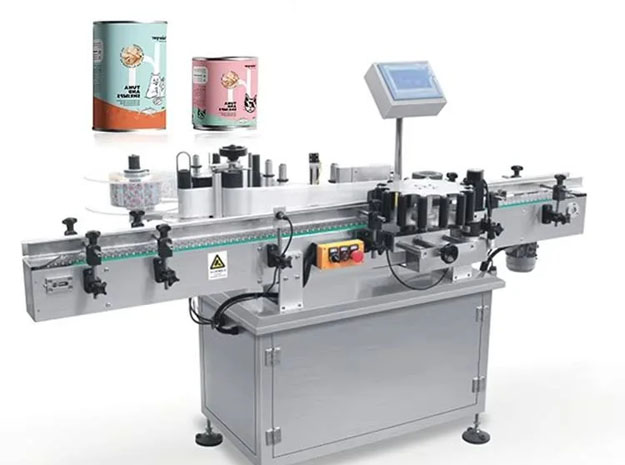
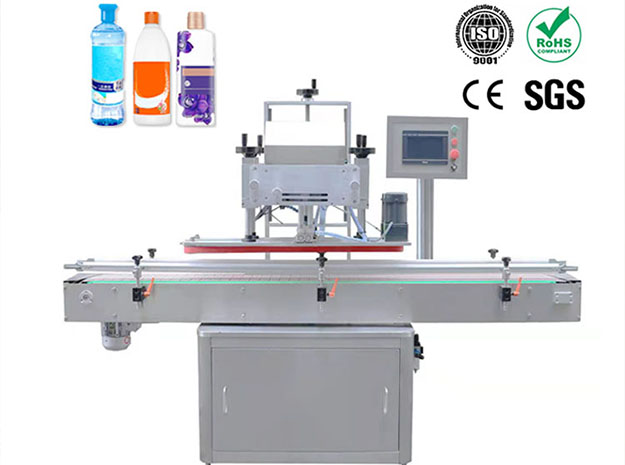
If the core components of the equipment are still in good condition, such as the frame, main motor, and control system motherboard, and only some functions are outdated or individual parts are aging, then upgrading is a cost-effective option. Common upgrade projects include: upgrading old relay controls or microcontrollers to PLC touchscreen controls for more intuitive operation, storable parameters, and faster production changeover; replacing old pneumatic filling heads with servo motor-driven filling heads for higher precision and lower energy consumption; modifying conveyor belts by adding adjustable guardrails and buffer platforms to improve overall line smoothness; and adding vision inspection systems after labeling or capping machines to automatically reject defective products. The advantages of upgrades are relatively low investment, typically 20% to 40% of the new machine price, short downtime, and the ability to be implemented in phases. However, the disadvantage is that performance improvements are limited by the existing equipment's structure. This approach is suitable for equipment that is 5 to 8 years old, has good core components, and where production capacity demand has not increased significantly.
Replacement falls between upgrades and scrapping. Simply put, it involves using the old equipment to offset a portion of the cost and replacing it with a newer, more efficient, and similar type of equipment. Many equipment manufacturers offer trade-in services. The advantages of trade-in are quite clear: the new equipment far surpasses the old equipment in filling accuracy, speed, and energy consumption, representing a significant performance improvement; the trade-in provides brand-new equipment with a 1-2 year warranty, eliminating concerns about the old equipment breaking down again after repairs; the residual value of the old equipment can be realized, allowing it to be used to offset the cost of the new machine, typically 10% to 20%, rather than being idle or sold as scrap metal; and it also eliminates the risk of parts being discontinued. This approach is suitable for equipment that has been used for 8 to 12 years, has a significantly increased failure rate, and whose maintenance costs are approaching the depreciation cost of a new machine.
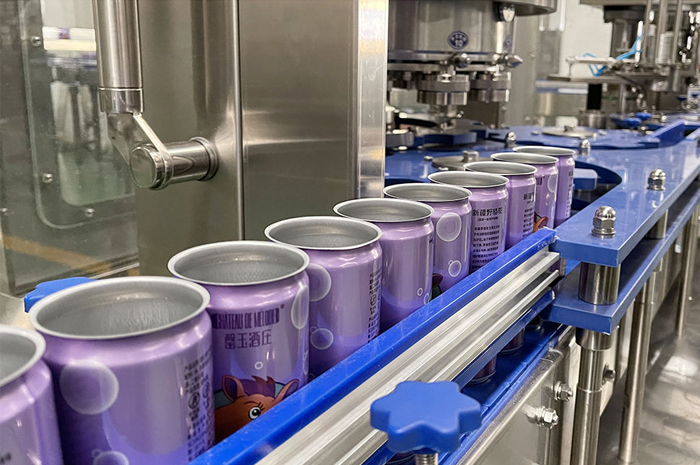
When equipment develops more serious problems, scrapping may be the most rational choice. For example, core components may be damaged and no spare parts available; custom-made spindles, molds, or non-standard motors may no longer be manufactured, requiring expensive custom repairs; or the technological gap may be too large—equipment over 10 years old may consume 2 to 3 times the energy of a new machine, with production efficiency less than half that of a new machine, and continuing to use it would only increase the unit cost; or frequent equipment downtime may affect delivery, requiring repairs once or twice a month, forcing customer orders to be delayed, resulting in losses not only in repair costs but also in reputation. Scrapping is not failure, but timely loss mitigation. Dismantling and recycling valuable components such as motors, cylinders, and stainless steel materials from old equipment to free up workshop space for a new production line is more cost-effective in the long run.
In short, if equipment is used for 5 to 8 years and core components are in good condition, it is suitable for upgrading, with an investment of 20% to 40%, resulting in a moderate improvement; if used for 8 to 12 years and malfunctions increase, it is suitable for replacement, with an investment of 60% to 80% after deductions, resulting in a significant improvement; if used for more than 12 years and spare parts are hard to find, it is recommended to scrap and replace it with a new one, with an investment of 100%, resulting in a complete improvement.
Old equipment doesn't necessarily need to be stubbornly kept going, nor does it need to be immediately discarded. Upgrading, replacing, and scrapping each have their applicable scenarios. The key is to clearly calculate the costs: which is more worthwhile—the cost of continuing to use it or the benefits of replacement? If you are struggling with your old equipment, please contact us. We can conduct an on-site assessment of your equipment's condition and provide professional advice on upgrading, replacing, or scrapping to help you find the most cost-effective solution.
Henan Mingtan is a manufacturer specializing in the production and export of packaging machinery. We offer filling machines, capping machines, can sealing machines, bottle washing machines, labeling machines, heat shrink packaging machines, strapping machines, inkjet printers, and other machines. If you have any needs, please contact us. Our staff will provide one-stop solutions and excellent service.