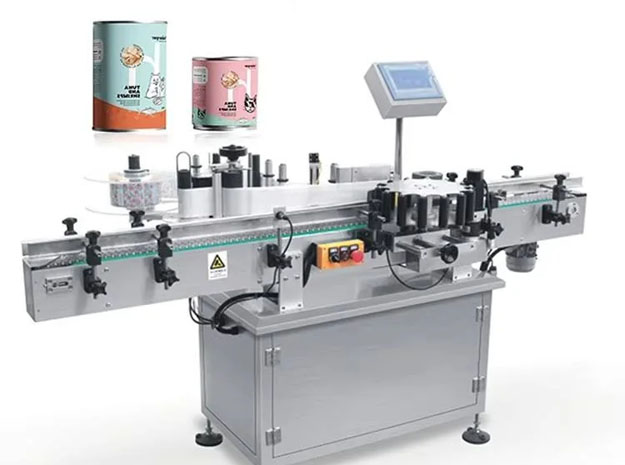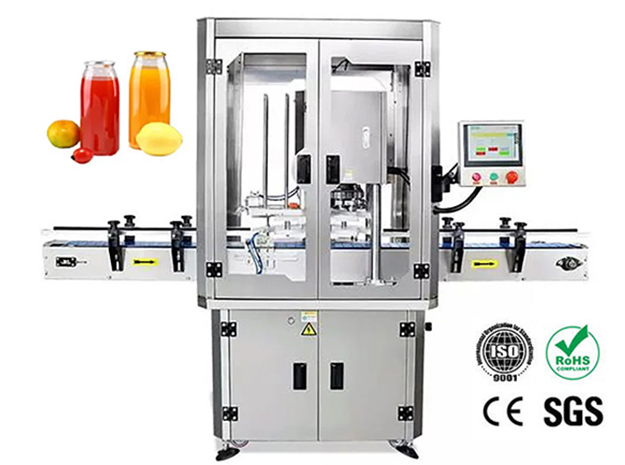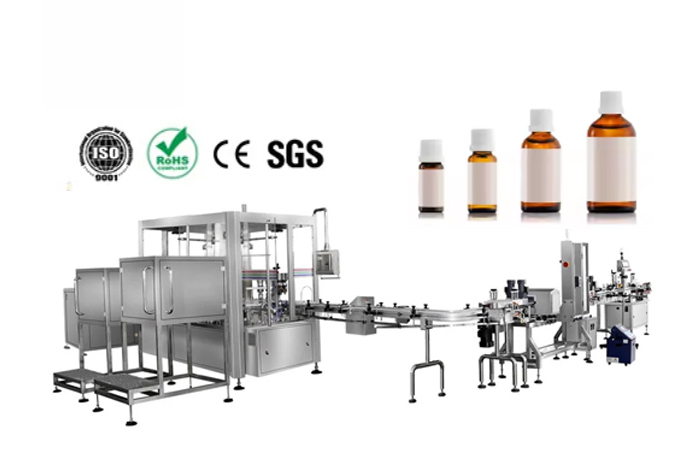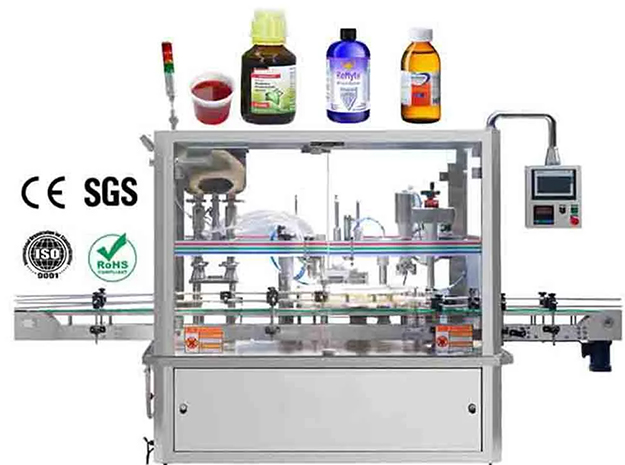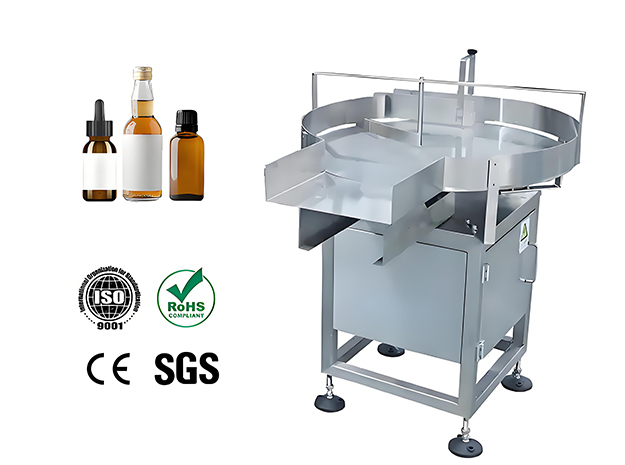
In today's increasingly competitive manufacturing industry, rising labor costs, increased energy consumption, and production efficiency bottlenecks have become three major challenges plaguing many enterprises. The emergence of fully automated filling production lines is precisely to solve these problems. It's not just an upgrade of a single piece of equipment, but a comprehensive systemic solution from "bottle in, bottle out."
Traditional semi-automatic production lines rely on manual bottle loading, filling, and capping, with the overall line speed often stalled at some stage. A typical semi-automatic production line typically fills at a speed of around 20-30 bottles per minute, and the faster the speed, the more labor becomes insufficient. Fully automated filling production lines integrate bottle handling, filling, capping, and labeling processes, achieving seamless line operation. For example, a daily chemical company previously used semi-automatic equipment to produce approximately 8,000 500ml shampoo bottles per day. After upgrading to a fully automated production line, the filling speed increased to 50-60 bottles per minute, and the daily output reached over 25,000 bottles, representing a three-fold increase in efficiency. More importantly, the entire line is centrally controlled by a PLC, with one-button start and automatic speed matching for each workstation, reducing manual intervention and waiting time.
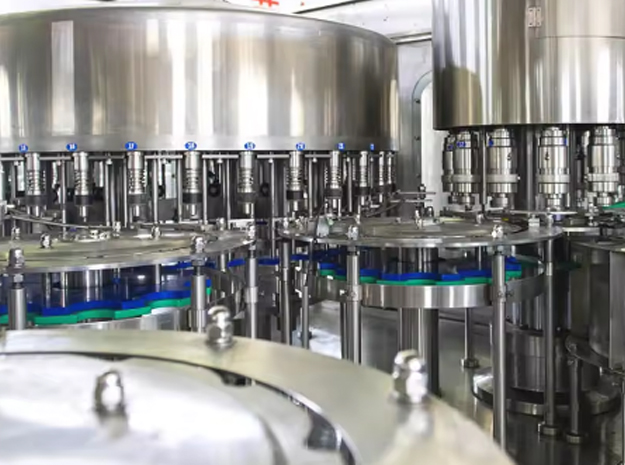
In terms of energy saving, the fully automated filling production line also performs exceptionally well. Firstly, there's the reduction in power consumption. Traditional pneumatic filling machines require a large air compressor for continuous air supply, resulting in high energy consumption. Fully automated production lines, on the other hand, mostly use servo motor drives, consuming power only during filling and capping, with almost no energy consumption during standby. Generally, servo drives can save 30%-50% of power compared to pneumatic drives. Secondly, there's the reduction in material waste. Manual filling inevitably results in spills, overfilling, or underfilling. Fully automated filling machines are equipped with high-precision flow meters or piston metering, achieving filling accuracy within ±0.5%, effectively reducing material waste. Based on 500ml bottles per day and 10,000 bottles per day, a 1% improvement in accuracy can save approximately 18,000 liters of material per year, directly translating into profit. Thirdly, there's the reduction in packaging material waste. Manual cap placement and labeling easily produce defective products such as crooked caps and labels. Fully automatic capping and labeling machines, through visual inspection or mechanical positioning, reduce the defect rate from 3%-5% to below 0.5%, minimizing packaging material waste.
Cost reduction is a natural consequence of the former two. Let's look at a specific case. A condiment factory used a semi-automatic production line before the upgrade, requiring 6 operators (2 for filling, 1 for capping, 1 for labeling, and 2 for loading), with a daily output of 8,000 bottles and an annual output of approximately 2.4 million bottles. After upgrading to a fully automatic filling production line, only 1 operator is needed for monitoring and replenishment, and the daily output reaches 25,000 bottles. In terms of cost comparison, labor costs are reduced by 5 people, which, at 50,000 yuan per person per year, amounts to an annual saving of 250,000 yuan; in terms of energy costs, servo motors save approximately 15,000 yuan in electricity costs annually compared to pneumatic systems; in terms of material loss, improved precision reduces spillage, saving approximately 30,000 yuan in material value annually; and in terms of packaging material loss, the reduced defect rate saves approximately 20,000 yuan in packaging material costs annually. The total annual savings are approximately 315,000 yuan. A fully automated filling production line with a small to medium capacity requires an investment of approximately 400,000 to 600,000 yuan, with a payback period of 1.5 to 2 years. Subsequent annual cost savings directly translate into increased profits.
Efficiency improvement, energy saving, and cost reduction are interconnected. A fully automated filling production line is not simply about "replacing humans with machines," but rather about optimizing the entire line to achieve simultaneous improvements in efficiency, energy consumption, and cost. If you are troubled by low production efficiency, high labor costs, and significant energy consumption, consider starting with a fully automated filling production line and let the equipment create value for you. For further evaluation of ROI or to obtain customized solutions, please contact us.