In the post-packaging stages of the beverage, food, and daily chemical industries, organizing scattered products into neat packaging units is a crucial step connecting production and logistics. Previously, this process often relied heavily on manual labor: bottle placement, wrapping, sealing, heat shrinking, cooling… each step required human supervision and manual intervention, resulting in low efficiency, numerous defects, and high labor costs. The advent of fully automatic plastic packaging machines has completely changed this situation—from loose bottles to complete packages, everything is automated with a single click.
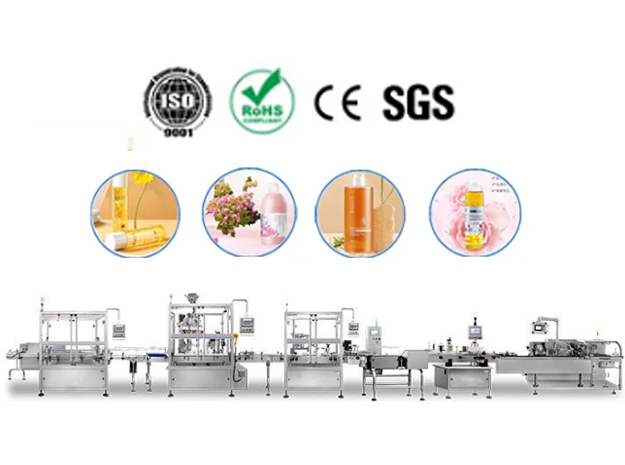
A standard fully automatic plastic packaging machine integrates the entire process from bottle feeding, bottle sorting, wrapping, sealing, shrinking, to cooling and shaping. Its working logic is clear: scattered products enter the machine via a conveyor belt, where they are automatically arranged into pre-set packaging combinations; then, the film is automatically wrapped around the product, and the sealing and cutting system completes the sealing and cutting; the wrapped products enter the heat shrink tunnel, where the film shrinks evenly and adheres tightly to the product surface under precisely temperature-controlled hot air circulation; finally, through the cooling and shaping tunnel, the film quickly solidifies, forming a compact and aesthetically pleasing packaging unit. Throughout the entire process, the operator only needs to set the parameters on the touchscreen and press the start button, and the machine will automatically complete all processes. No manual bottle placement, manual film application, or monitoring of the sealing process is required—this is the true meaning of "one-click completion."
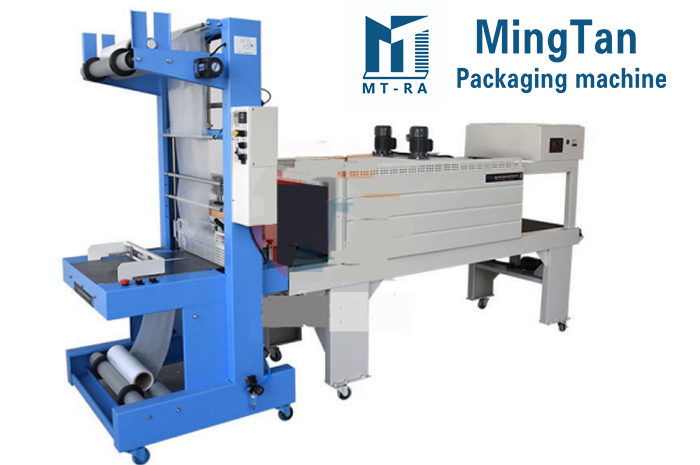
In terms of labor savings, the fully automatic plastic packaging machine's advantages are particularly prominent. For example, a medium-sized beverage filling line typically requires 4 to 6 operators to handle bottle placement, film application, sealing, cutting, and heat shrink monitoring. However, with the introduction of a fully automatic plastic packaging machine, only one operator is needed for monitoring and refilling the entire downstream packaging line. Based on the average labor cost in China's manufacturing industry, a packaging worker's annual salary is approximately 60,000 to 80,000 yuan, including social security and benefits. A fully automated plastic packaging machine can replace five workers, saving 300,000 to 400,000 yuan in labor costs annually. For factories with high daily output, the equipment investment can typically be recouped within one to two years.
Besides saving manpower, the most important benefit is reducing the labor intensity for workers. In the past, packaging was one of the most physically demanding jobs in the workshop, involving long hours of standing, repetitive movements, and high-temperature working conditions, making it undesirable for many young people and increasingly difficult to recruit. Fully automated plastic packaging machines liberate workers from repetitive manual labor, transforming them into "equipment monitors." They no longer need to bend over to place bottles or stand guard at high-temperature shrink ovens; they only need to periodically check the equipment's operating status and replenish packaging film. Improved working conditions also reduce recruitment difficulties.
In terms of peace of mind, the quality stability and low loss of fully automated plastic packaging machines are equally convincing. Manual packaging is easily affected by fatigue and mood, resulting in inconsistent quality from morning to afternoon; while fully automated plastic packaging machines execute the same parameters for every sealing, cutting, and shrinking operation, ensuring highly consistent packaging quality. Regarding waste, the sensor-controlled film feeding system precisely regulates the film length, reducing film waste; the precise temperature control system ensures uniform shrinkage, minimizing waste caused by improper temperature. Overall, automated packaging lines can reduce the defect rate to 1/5 or even less of manual operation, and material loss is significantly reduced.
Fully automatic plastic packaging machines are not simply about "replacing humans with machines," but rather integrating scattered packaging processes into a standardized workflow. From loose bottles to full packages, one-button start, fully automated—saving manpower, effort, and worry. If you are troubled by low efficiency in downstream packaging, high labor costs, and persistently high defect rates, consider fully automatic plastic packaging machines. They may be able to solve your problems better than you imagine. Contact us for customized packaging solutions tailored to your products and production capacity.