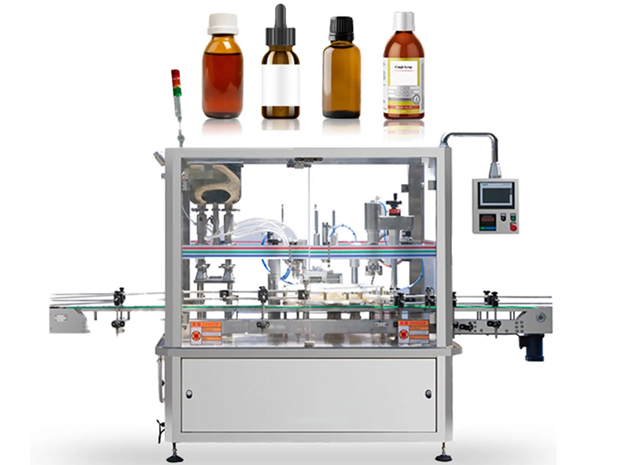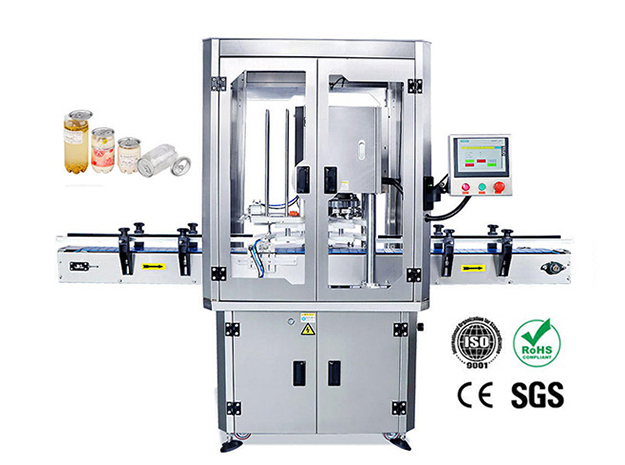
Filling machines, labeling machines, and capping machines are the three core pieces of equipment on a packaging production line, responsible for the three key stages of "filling," "labeling," and "sealing," respectively. A proper combination can create an efficient, stable, and labor-saving automated packaging line. When considering different bottle types, materials, production capacities, and budgets, selection requires comprehensive consideration of both equipment characteristics and overall line compatibility.
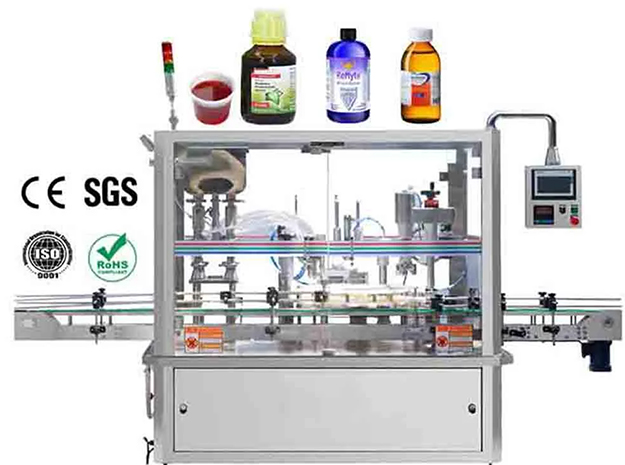
As the starting point of the production line, the selection of a filling machine mainly depends on the material state, filling accuracy, and production capacity requirements. Aqueous solutions and low-viscosity liquids are suitable for piston or flow meter filling machines, while high-viscosity pastes are best filled with piston or screw filling machines. Materials containing granules require special valve bodies to prevent clogging. For small batches with multiple specifications, servo-controlled models are recommended for quick changeovers. When selecting a machine, pay close attention to the number of filling heads, the material of the parts in contact with the material (304 or 316L stainless steel should be used for food/pharmaceutical products), and whether it supports CIP cleaning. Our partner company previously used manual filling of toiletries, which was inefficient and prone to large filling errors. After introducing a 6-head piston filling machine, the filling accuracy stabilized within ±0.5%, and production capacity increased threefold. Furthermore, the 316L stainless steel construction meets GMP cleanroom requirements.
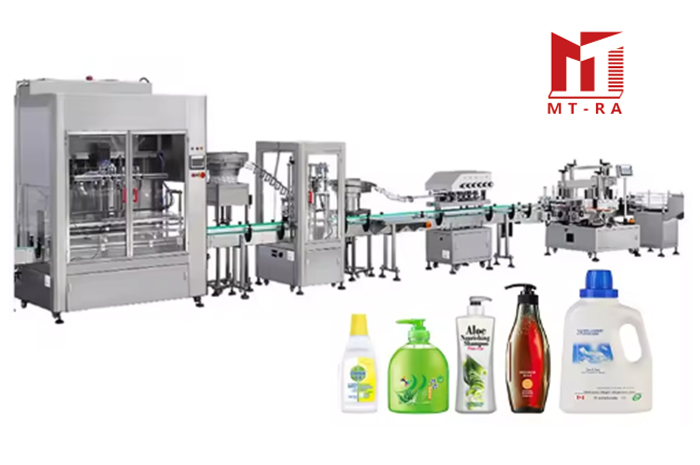
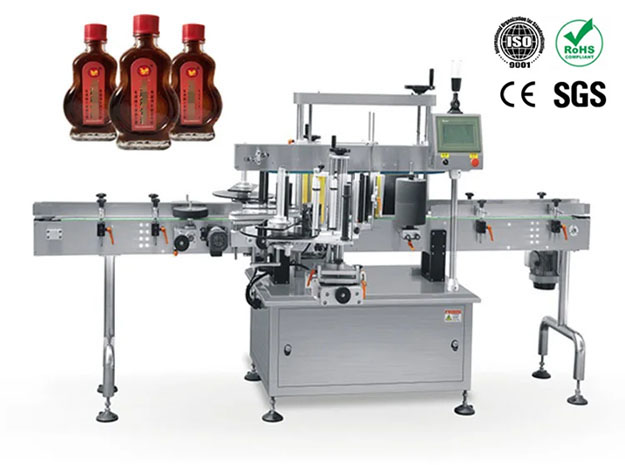
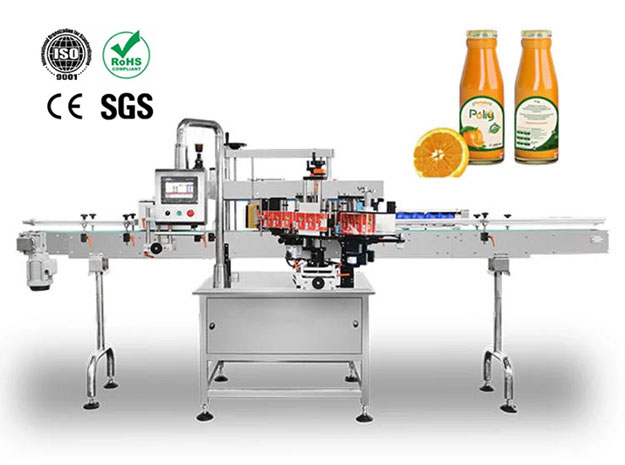
The selection of a labeling machine depends on the bottle shape and label type. Round bottles are suitable for round bottle labeling machines, flat or square bottles are best suited for double-sided labeling machines, and irregularly shaped bottles require servo or vision-positioning labeling machines to ensure accuracy. Standard self-adhesive labeling machines are sufficient for self-adhesive labels, while shrink film labels require a sleeve labeling machine. When selecting a machine, attention should be paid to labeling accuracy (whether it reaches within ±1mm), changeover time (whether it has a quick-release structure), and whether it supports visual inspection to improve yield. Our client, a food and beverage factory, produces various sizes of round bottles of juice. Previously, manual labeling frequently resulted in misaligned labels and wrinkles. After switching to a fully automatic round bottle labeling machine, the labeling accuracy reached ±0.5mm, and the speed reached 80 bottles per minute. The quick-release structure also reduced changeover time from 30 minutes to 5 minutes.
Capping machines directly affect the sealing of packaging and the yield rate. Ordinary threaded caps are suitable for clamp-type capping machines, while tamper-evident caps require a special capping head to ensure the tamper-evident ring is securely fastened. Pump heads or spray caps are best suited for gripping capping machines that allow for simultaneous pressing and screwing. Aluminum caps require a crimping machine. When selecting a machine, key considerations include torque control accuracy, support for quick-change capping heads, and adaptability to bottle height differences. Our client's cosmetics factory produces serum bottles with pump heads. Previously, using ordinary capping machines often resulted in misaligned caps or unstable torque leading to leakage. After replacing the capping machine with a gripper-type servo capping machine, simultaneous pressing and capping was achieved, with torque accuracy controlled within ±0.5 N·m. The defect rate dropped from 3% to 0.3%. The quick-change capping head design allows for rapid switching between different pump head specifications.
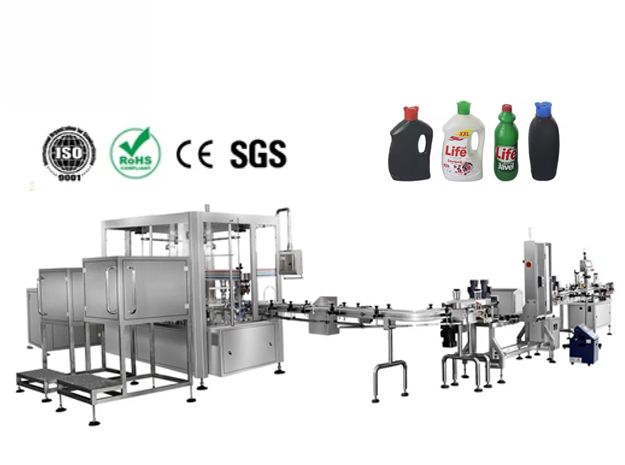
The combination and matching of the three machines are equally crucial. In terms of speed matching, the filling machine speed should be the benchmark, with the labeling and capping machines operating at slightly higher speeds to avoid bottle blockages or empty runs caused by "fast filling, slow capping." Regarding bottle type uniformity, if compatibility with multiple bottle types is required, it is recommended that all three machines use servo-adjustable or quick-change structures to reduce changeover time. For control system integration, the machines can be linked to achieve one-button start/stop, reducing operator error and the risk of misoperation.
While the filling, labeling, and capping machines each have their specific functions, they collectively determine the efficiency, yield, and stability of the packaging line. When selecting machines, it is not necessary to solely pursue the highest speed for a single machine; instead, the entire line should be considered, taking into account material characteristics, bottle and cap types, changeover frequency, and budget. If you are planning a new packaging production line or looking to upgrade your existing equipment, please contact us. We can provide a complete "golden combination" solution based on your bottle samples, cap samples, and production capacity requirements.