In the canned food, beverage, milk powder, and chemical industries, can sealing is a crucial step in the packaging process. A good seal keeps the product fresh and extends its shelf life; a poor seal leads to leaks, seepage, and loose lids, affecting appearance to the point of spoiling the entire batch. Many small and medium-sized factories still rely on manual can sealing or semi-automatic equipment, resulting in low efficiency and a high rate of defective products. A fully automatic can sealing machine can completely solve this problem.
Let's first look at the pain points of manual can sealing. First, it's inefficient. A skilled worker operating a semi-automatic can sealing machine can only seal 10 to 20 cans per minute, and fatigue from prolonged operation further reduces speed. During peak seasons with high order volumes, either overtime work or hiring more staff is necessary, causing labor costs to rise sharply. Second, it results in a high defect rate. When sealing cans manually, the positioning of the can, the pressure of the sealing head, and the sealing force all rely on the operator's experience and feel. Different people and different times can result in varying sealing effects. Even a slight lapse in concentration can lead to problems such as incomplete sealing, can deformation, and uneven edge rolling. In some food factories, the defect rate for manually sealed cans is as high as 3% to 5%, meaning that 3 to 5 out of every 100 cans need to be reworked or scrapped. Thirdly, there is a lack of stability. Manual operation is greatly affected by emotions, fatigue, and a lack of responsibility; the sealing quality on a Monday morning can differ significantly from that on a Friday afternoon. This instability is a significant risk for companies that require a long-term, stable supply.
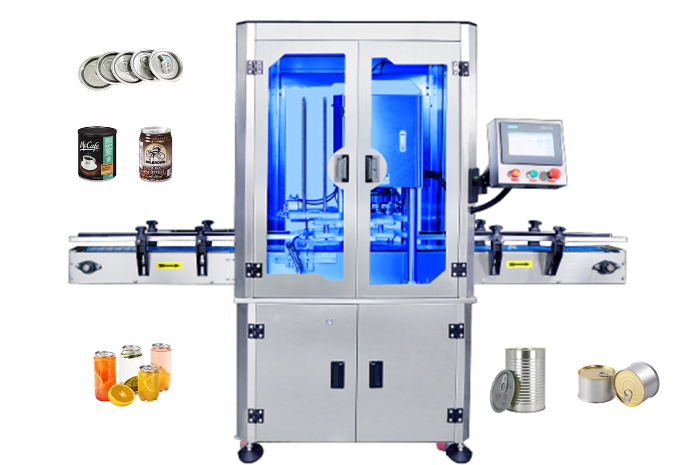
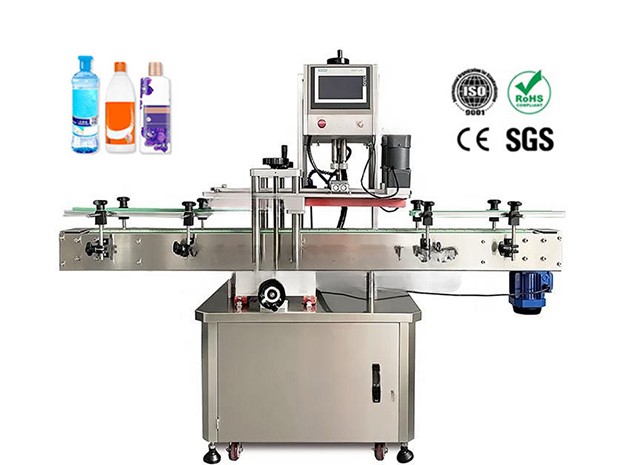
Fully automatic can sealing machines handle the entire sealing process, from can feeding, positioning, sealing to can exiting, all automatically without human intervention. Taking a typical fully automatic can sealing machine as an example, its workflow is as follows: Cans enter the equipment via a conveyor belt and are automatically sorted and positioned; after a photoelectric sensor detects that a can is in position, the pressure head automatically descends to tighten the can lid; then, the first and second sealing rollers move sequentially to roll the can lid and can body together; the sealed can is automatically sent out to the next process. The entire process takes only 1 to 2 seconds, and can complete 30 to 60 cans per minute, which is 3 to 5 times more efficient than manual labor. More importantly, the sealing quality of the fully automatic can sealing machine is highly consistent. The machine's sealing force, roller trajectory, and pressure head pressure are all preset parameters. Each sealing operation performs the same action, eliminating fatigue and inattention, and the defect rate can be controlled to within 0.5%, far lower than manual operation.
Let's look at a real-world example. A fruit canning factory previously used two semi-automatic can-sealing machines, each requiring one worker to operate, with a daily output of approximately 8,000 cans and a defect rate of around 4%. This meant that over 300 cans needed to be reworked or scrapped daily due to sealing issues, resulting in significant losses. Later, they introduced a fully automatic can-sealing machine, requiring only one worker for feeding and monitoring. Daily output increased to 25,000 cans, and the defect rate dropped to below 0.3%. The equipment investment was recouped in about eight months, and thereafter, the monthly savings in labor and reduced waste directly translated into profit.
Manual can sealing isn't unusable, but its limitations are obvious when pursuing efficiency, stability, and low waste. A fully automatic can-sealing machine isn't just a nice-to-have, but a lifesaver—it transforms the can-sealing process from "human-dependent" to "equipment-dependent," and from "unstable" to "controllable." If you're struggling with low sealing efficiency and high defect rates, consider a fully automatic can-sealing machine. It might solve your problems better than you think. For more technical specifications or to obtain a sealing solution tailored to your can type, please contact us.
Henan Mingtan is a manufacturer specializing in the production and sales of can sealing machines. With extensive export experience, we can meet the sealing needs of most customers and can send sample cans for testing. If you have any needs, please contact us. We will provide you with one-on-one service and a satisfactory solution.