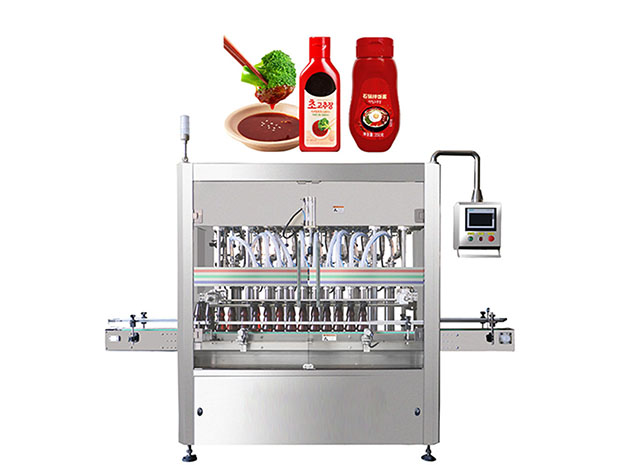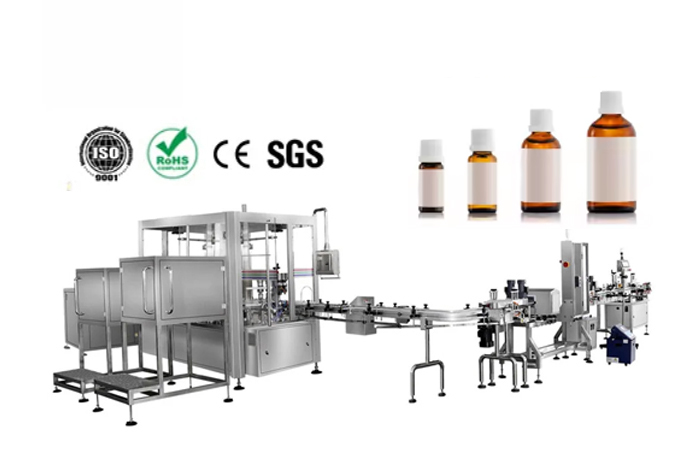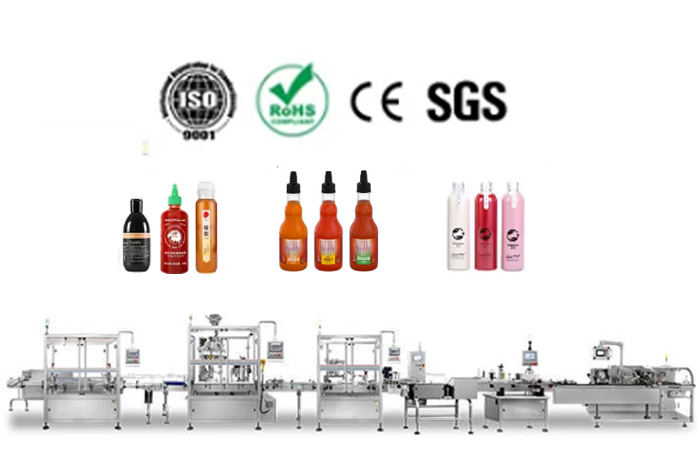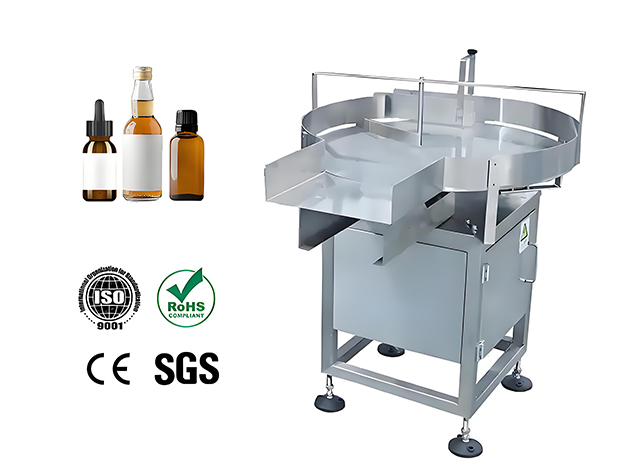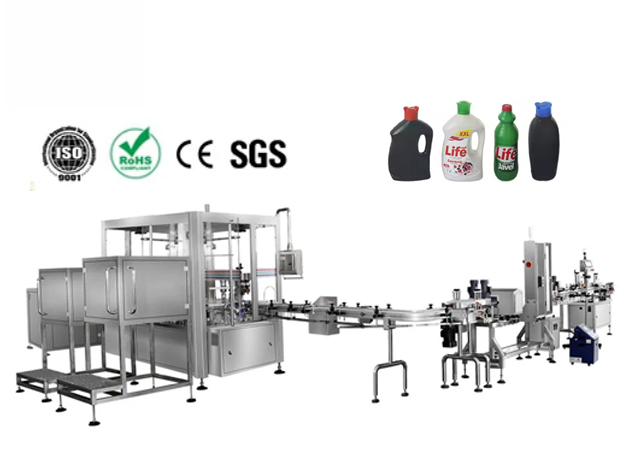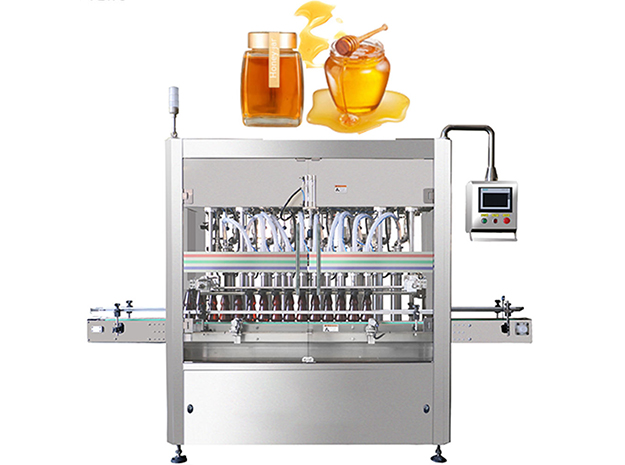
Among the family of filling equipment, hydraulic filling machines have always held a special place. While other filling machines frequently "stuck" when handling high-viscosity, large-particle, and poorly flowing materials, hydraulic filling machines can handle them with ease. From ketchup and honey in the kitchen, to lubricating oil and paint in factories, and resins and adhesives in the chemical industry, the application scenarios of hydraulic filling machines are far wider than many people imagine.
To understand the wide applicability of hydraulic filling machines, it is essential to understand their working principle. Unlike equipment that relies on air pressure or gravity for filling, hydraulic filling machines use a hydraulic system as their power source. A hydraulic cylinder drives a piston to reciprocate, pushing the material from the cylinder and filling it into the container. The advantage of this power method is its high and stable pressure, unaffected by changes in material viscosity. Simply put, air pressure transmission encounters increased resistance and a significant decrease in speed when encountering high-viscosity materials; while hydraulic transmission can provide continuous and stable high-pressure output, maintaining a uniform filling speed even for materials as thick as toothpaste. This is the fundamental reason why hydraulic filling machines are "unbiased in their application."
In the food industry, the viscosity range of materials is extremely wide. From water-like vinegar and soy sauce, to high-viscosity materials like honey and jam, and then to granular materials like fermented bean paste and tomato sauce, the difficulty of filling increases progressively. For thin materials, ordinary gravity or flow meter filling machines are sufficient, but for high-viscosity and granular materials, ordinary equipment is prone to problems such as filling head clogging, inaccurate filling volume, and dripping. Hydraulic filling machines, with their powerful thrust and stable pressure output, can easily handle these "difficult" materials. Taking granular tomato sauce as an example, the large-diameter filling valve and flexible piston movement of the hydraulic filling machine can complete accurate filling without damaging the integrity of the granules.
In the daily chemical industry, products such as facial cleansers, shampoos, conditioners, and shower gels share the common characteristics of high viscosity and poor flowability. If the thrust of the filling equipment is insufficient, phenomena such as slow filling speed, stringing, and tailing will occur, affecting the product appearance and filling accuracy. Hydraulic filling machines are widely used in the daily chemical industry. Their back-suction filling valves can suck back any remaining material from the filling nozzle after filling, effectively preventing dripping and stringing, and keeping the bottle mouth clean. Simultaneously, the stability of the hydraulic drive ensures highly consistent filling volume for each bottle, making it particularly suitable for mass production.
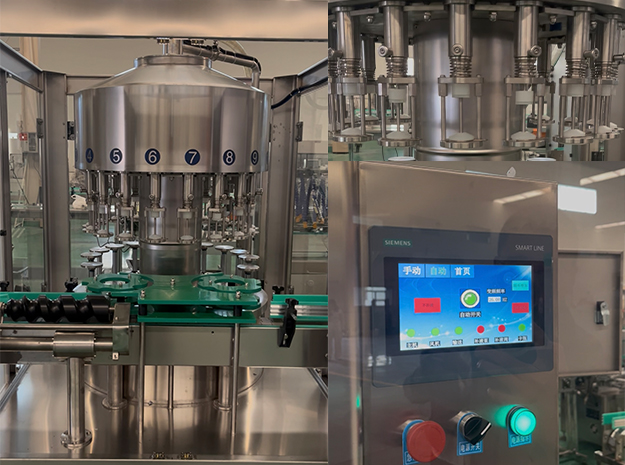
The filling scenarios in the chemical industry differ from those in the food and daily chemical industries: containers are large, ranging from 20L to 200L; materials are special, being corrosive or flammable; and high precision and safety requirements are necessary. The advantages of hydraulic filling machines in the chemical industry are reflected in several aspects: high thrust is suitable for high-viscosity chemical raw materials, such as lubricating oils, resins, adhesives, and coatings; the equipment can be made of corrosion-resistant materials such as 316L stainless steel and Teflon, adapting to acidic and alkaline materials; explosion-proof motors and sealing designs can be configured to meet the safety requirements of chemical workshops; when filling large containers, the stable pressure of the hydraulic system ensures the filling head reaches the bottom of the container, reducing air bubbles and splashing.
In the pharmaceutical industry, hydraulic filling machines are primarily used for filling high-viscosity pharmaceuticals such as ointments and gels. GMP cleanrooms have extremely high hygiene requirements for equipment; hydraulic filling machines utilize an all-stainless steel structure, and the cylinders and pipes are easy to disassemble and clean, meeting the cleanliness standards of the pharmaceutical industry. Simultaneously, the hydraulically driven filling accuracy can reach ±0.5%, meeting the stringent quality requirements of pharmaceutical production.
From food sauces to daily chemical pastes, from chemical raw materials to pharmaceutical ointments, hydraulic filling machines have applications across multiple industries. Its core value lies in providing a stable, accurate, and efficient filling solution regardless of the material's consistency, particle content, or container size. If your materials are difficult to handle, consider a hydraulic filling machine; it may solve your problems better than you imagine. For more technical parameters or to obtain a filling solution tailored to your materials, please contact us.
Henan Mingtan Import & Export Trading Co., Ltd. is a specialized manufacturer of hydraulic filling machines. We have over ten years of experience in import and export, as well as in custom packaging machinery and export. If you need to fill liquid materials, contact us for a one-stop solution.