There's a widening misalignment in the packaging machinery industry: customers are demanding increasingly "different" things, while many suppliers are still submitting the same standard template they've used for a decade.
A purchasing manager in the food packaging sector once bluntly stated: he contacted three suppliers; two sent standard machine quotations, while only one asked him over a dozen questions. He ultimately chose the supplier who asked questions—not because it was cheaper, but because their proposed solution was usable. Behind this choice lies a shift in the purchasing logic of packaging machinery: customers are no longer buying a machine, but a solution that works for their specific production needs. *Standard quotations cannot answer this question* The first problem with standard quotations is that they assume all customers have the same requirements.
A standard machine priced at 200,000 sounds competitive. However, the customer actually produces irregularly shaped bags, requiring additional forming molds, adjustments to the sealing angle, and adaptation to the existing MES system—these "additions" could add another 150,000, and extend the delivery time by two months. Worse still, the equipment arrives on-site only to find it incompatible with the customer's new materials, turning changeover time from the promised 10 minutes to 40 minutes, resulting in a 30% reduction in production capacity. At this point, the customer won't remember the initial low price; they'll only remember, "This supplier is unprofessional."
Industry research data also illustrates this problem: 82% of small and medium-sized cardboard box factories in China have more than 300 SKUs in their annual orders. Traditional general-purpose equipment has a compatibility rate of less than 40% for irregularly shaped boxes and small-batch orders, wasting 15% of daily effective capacity just in the setup phase. Customers no longer want "a machine that can produce," but rather "a machine that can adapt to the pace of my orders." This is not included in the standard quotation.
The second problem is that it hides the most expensive part of customization.
The real cost of customized equipment is not in the hardware itself, but in changeover capabilities, material compatibility, and production line integration. Mespack's newly launched horizontal packaging platform reduces changeover time for pre-fabricated configurations to 5 minutes using an electronic vertical carousel architecture; OPTIMA's SpeedCare platform employs a format-independent delivery system, completing format switching within 20 minutes without tools. These capabilities are not just a line of "optional accessories" on a standard quote, but core indicators determining whether equipment can survive on a customer's production line.
However, many suppliers' quotes only list the main unit price, delivery time, and a phrase "customizable to requirements." The extent of customization, changeover time, compatible materials, and compatibility with the customer's existing SCADA system—information that customers truly need to assess—is completely absent from the quote. Customers, holding this list, cannot compare or make decisions, and can only choose one that "looks similar."
The third problem is that it shifts the risk to the customer.
Offering a quote without understanding the requirements essentially leaves uncertainty to after the contract is signed. What form of product does the customer produce—powder, granules, liquid, or solid? Are the packaging bags pre-made bags or roll film? What is the size range, and how many times does the minimum and maximum size differ? What is the existing production line's cycle time? Will the new equipment be integrated into the existing line or operate independently? What are the limitations on the length, width, and height of the workshop space? What is the skill level of the operators? The answers to each of these questions will affect the equipment's structure, control system, changeover method, and final price.
A manufacturer supplying packaging equipment to food companies clearly stated in its inquiry response that each of its sub-models is "custom-made according to the form of the food produced by the customer, the size of the packaging bags, and the packaging speed requirements." This means that the quote is not based on choosing a model from a product catalog, but rather on working backward from the customer's production scenario to determine the configuration. Every question asked before quoting lays the foundation for the post-delivery effect.
The more customized the equipment, the less it can be quoted "based on intuition."
Customers don't want a cheap price list; they want a solution that works for their production scenario. One cardboard box factory, after adopting an integrated hardware and software solution, reduced the setup time for a single SKU from 18 minutes to 2 minutes, and lowered the slotting defect rate from 3.2% to 0.5%. Another factory, by integrating data from 12 machines through a SCADA system, reduced losses from single-line downtime by nearly 90%. These achievements are predicated on the supplier understanding the customer's equipment data interfaces, fault history, and production cycle time during the solution development phase.
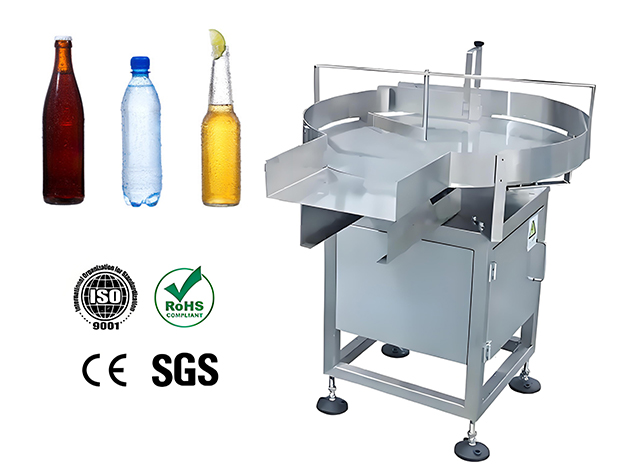
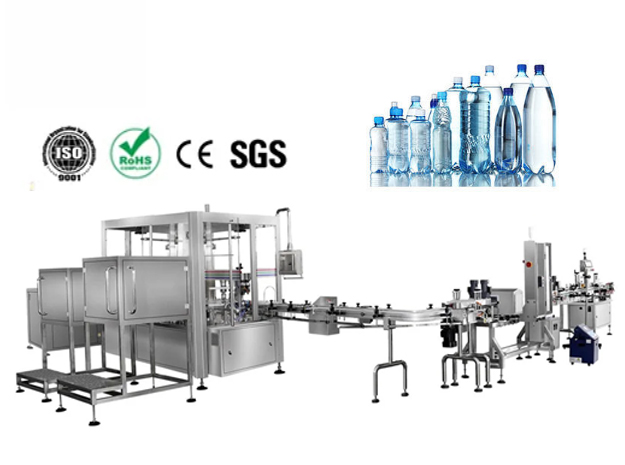
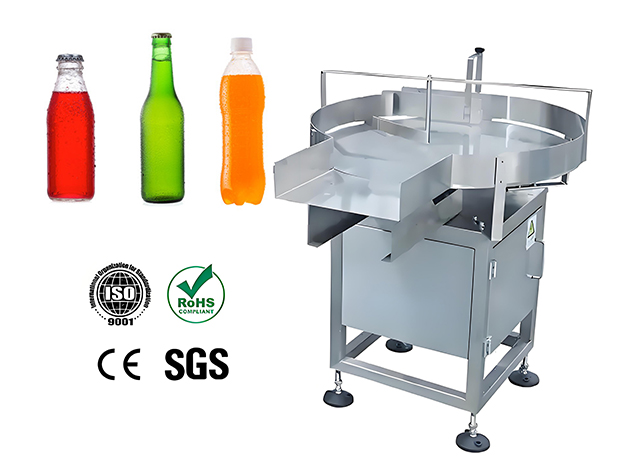
Henan Mingtan is a company specializing in the production and export of packaging machinery. Currently, its packaging equipment in production includes filling machines, capping machines, can sealing machines, labeling machines, inkjet printers, water purification equipment, and strapping machines. Customized equipment is available. Please leave a message or contact us via WhatsApp if you have any needs.